


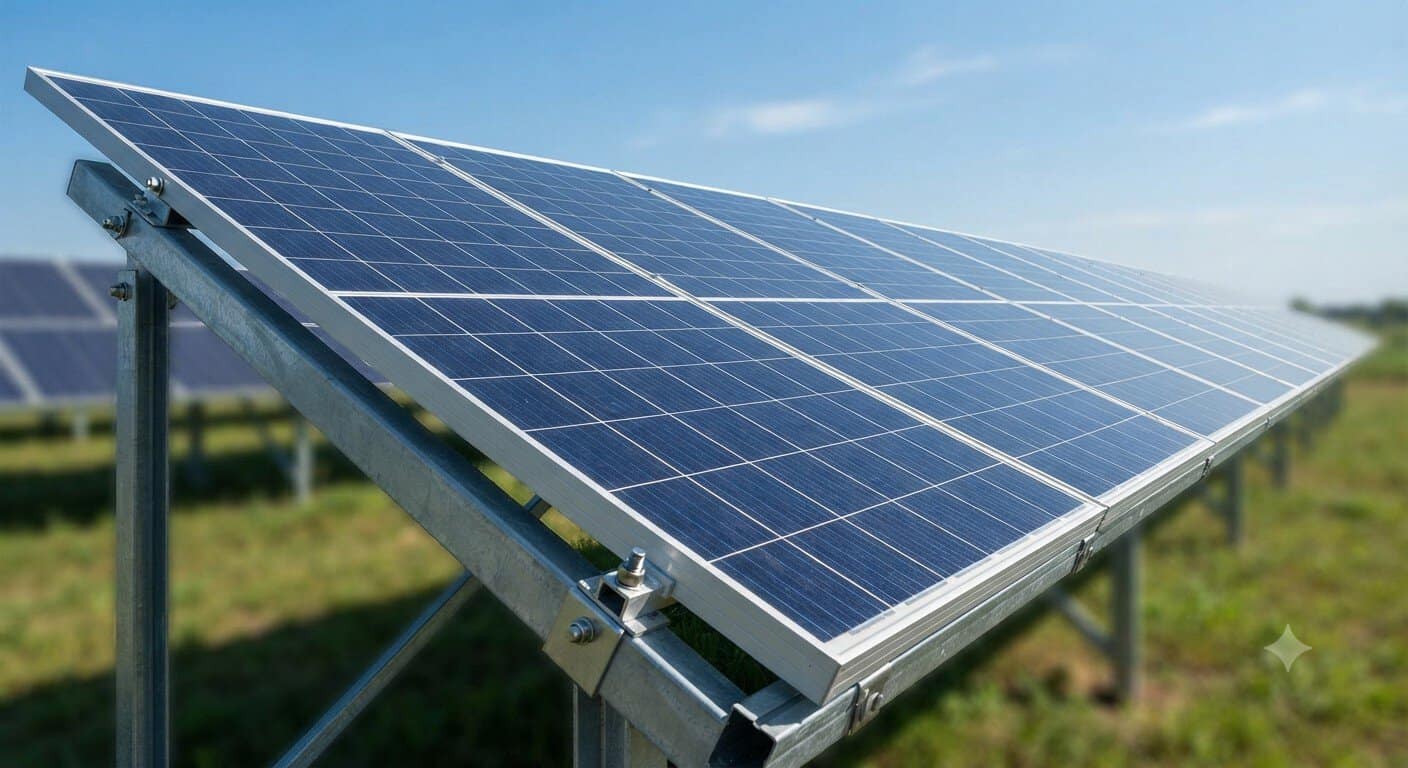
A solar panel converts sunlight into electricity without moving parts, fuel, or noise. This process is called the photovoltaic effect — a phenomenon discovered back in 1839 that today forms the foundation of a multi-billion-dollar industry. Let’s look at how it works and what affects its efficiency.
What Is a Solar Panel?
A solar panel (photovoltaic module) is a device that converts solar radiation into direct current (DC) electricity. The main component is a silicon cell measuring about 15 cm². A typical panel contains 60 or 72 cells. A panel itself does not store energy: batteries are required to power loads at night, and an inverter is needed to supply a 220 V AC network.
How Does a Solar Panel Convert Sunlight into Electricity?
The process is based on the photovoltaic effect. A silicon cell consists of two layers: p-type (an excess of “holes”) and n-type (an excess of electrons). A p-n junction forms at the boundary between them. When a photon strikes the cell, it knocks out an electron — the electric field of the p-n junction separates the charges, creating current in the external circuit.
One photovoltaic cell produces about 0.5–0.6 V. Sixty cells connected in series provide approximately 36 V, which is the operating voltage of a standard module. The power of a typical solar panel for a PV system is 400–580 Wp under standard test conditions (STC: irradiance 1000 W/m², cell temperature +25°C).
What Components Make Up a Solar Panel?
A panel is a multilayer “sandwich,” and each layer has a specific function:
- Tempered glass (3.2–4 mm) — transmits 91–93% of light and protects the cells from mechanical damage. It can withstand hail up to 25 mm in diameter at a speed of 23 m/s.
- EVA film (ethylene-vinyl acetate) — a laminating layer on both sides that protects against moisture and ensures adhesion.
- Solar cells — monocrystalline or polycrystalline. Monocrystalline: 21–23% efficiency, black appearance. Polycrystalline: 17–19% efficiency, bluish pattern.
- Backsheet or glass — bifacial modules use a glass rear side to capture reflected light.
- Aluminum frame and junction box with bypass diodes and MC4 connectors.
What Factors Affect Panel Efficiency?
There are many factors, but the most important are:
- Irradiance. Panel output is directly proportional to light intensity. At 500 W/m² instead of the nominal 1000 W/m², power output drops by about half.
- Temperature. Silicon loses efficiency when heated: the standard power temperature coefficient is –0.30%/°C. That is why proper ventilation is important.
- Tilt angle and orientation. The optimum is a 30–35° tilt facing south. A 20° deviation reduces annual energy production by 5–10%.
- Shading. A single shaded row of cells can reduce the power of the entire panel by 30–50%. Bypass diodes partially compensate for this effect.
- Degradation. A high-quality monocrystalline panel loses no more than 0.5% of its power per year. Over 25 years, output decreases by no more than 12.5% of the initial value, which is considered normal under IEC 61215.
Take these factors into account when choosing a system to ensure accurate calculations. Or contact Altek specialists — they can perform all calculations for you.
How Does a Solar Panel Work in Cloudy Weather and in Winter?
Monocrystalline panels generate electricity under any daylight conditions. In cloudy weather, irradiance drops to 100–300 W/m², so output falls to 10–30% of the nominal value, but the system continues operating.
In winter, two factors reduce production: shorter daylight hours and a lower sun angle. However, cold weather improves efficiency: at –5°C ambient temperature, the cell may heat up only to +20–30°C, which is much better than +60–70°C on a hot summer day. Energy production on a clear frosty day can sometimes exceed production during summer heat.
Snow on panels is usually a temporary issue. With a tilt of 30° or more, it typically slides off within 1–2 days. The load remains within the allowable 2400–5400 Pa specified by IEC 61215.
Where Are Photovoltaic Modules Used?
Photovoltaic modules are used in systems ranging from a few watts to hundreds of megawatts:
- Residential houses and apartments — 3–15 kW systems to reduce electricity bills and provide backup power during outages.
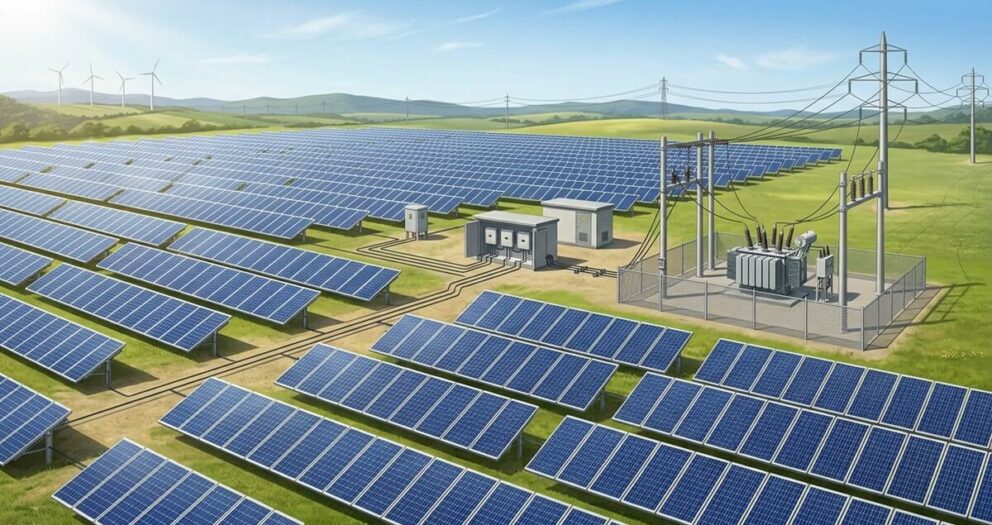
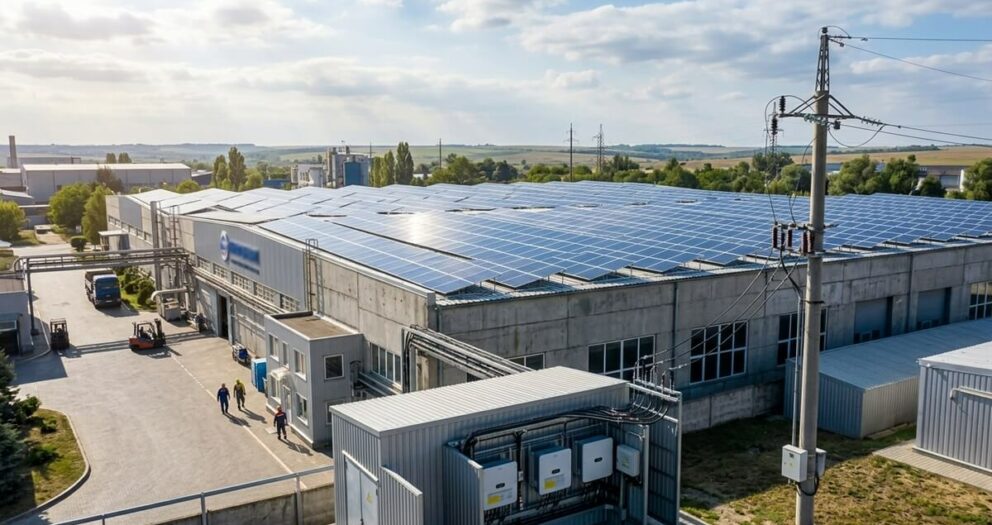
- Commercial and industrial facilities — from 30 kW to several MW for partial or complete coverage of electricity consumption.
- Agriculture — irrigation pumps, greenhouse lighting, and autonomous farms.
- Transport — electric vehicles with regenerative systems and solar charging stations.
- Portable applications — 20–200 W charging panels for tourism, military use, and emergency power supply.
In Ukraine, a 1 kWp system produces about 950–1300 kWh per year depending on the region. This is a real, measurable result. To get the maximum performance from your installation, work only with trusted professionals.


Your email address will not be published. All fields are required