


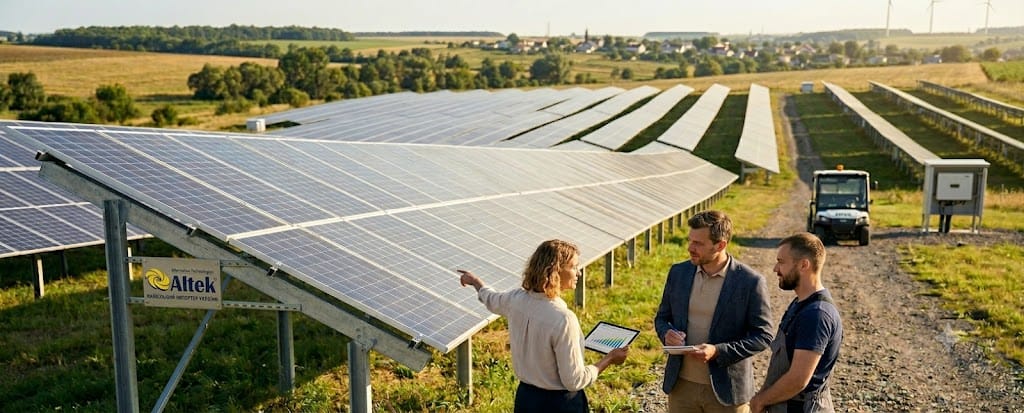
A solar power plant in Ukraine has already become a necessity for many businesses. Today, it is a full-fledged investment project with measurable ROI, government support, and a payback period of as little as 2 years, depending on system capacity and monetization model. Let’s examine the numbers, mechanisms, and potential pitfalls.
Why Investing in Solar Energy Is Relevant Today
Today, investing in a solar power system is more profitable than it was five years ago. Electricity tariffs have increased, equipment prices have fallen, and the feed-in tariff remains in effect. Industrial electricity rates in Ukraine are 3–4 times higher than residential rates. Every kilowatt-hour generated offsets purchased electricity, and the value of that offset increases year after year. A business that covers 50–70% of its electricity consumption through self-generation directly reduces production costs. Equipment prices have also decreased significantly over the last five years. A quality 450 W monocrystalline solar module now costs around $100. This fundamentally changes the payback calculation.
The feed-in tariff in Ukraine remains valid until January 1, 2030. For residential solar power systems, the tariff is linked to the euro, while actual payments are made in hryvnias according to the rate established by the regulator. In 2025, the benchmark rate for residential solar systems was approximately €0.132/kWh; however, the exact rate depends on the commissioning date of the power plant and the applicable resolution of the National Energy and Utilities Regulatory Commission (NEURC).
Earning Revenue from Solar Power Systems: Available Opportunities and Models
Monetizing a solar power plant is based on two fundamentally different approaches, which are often combined. These include:
- Savings through self-consumption. For households and businesses, this means replacing purchased electricity with self-generated power. A home consuming 400 kWh per month with a 5 kWp solar system can cover most of its electricity needs during summer and reduce utility bills to a minimum in certain months. A business consuming 10,000 kWh per month at industrial tariffs can save hundreds of thousands of hryvnias annually if a significant portion of its demand is covered by its own generation.
- Selling surplus electricity under the feed-in tariff. If a solar system generates more electricity than the facility consumes, excess energy can be exported to the grid at the established tariff. For example, a 10 kW solar power system in southern Ukraine can generate approximately 12,000–14,000 kWh per year. If half of this energy is exported to the grid, that equals 6,000–7,000 kWh. At a benchmark rate of €0.132/kWh, annual revenue from electricity sales would be approximately €790–925, in addition to savings from self-consumption.
The business model for legal entities differs from that of residential solar systems. A commercial solar power plant can be designed to offset on-site consumption, sell surplus electricity, or operate as a dedicated power generation facility. Projects with a capacity of up to 150 kW generally do not require a license, but proper grid connection, agreements with the distribution system operator, and compliance with technical requirements are necessary. Systems above 150 kW require licensing and a more complex approval process.
Factors Affecting Business Performance
The profitability of a solar power plant depends not only on equipment costs and electricity tariffs. Total energy generation, payback period, and revenue stability are influenced by technical site parameters, geographic location, connection scheme, and design quality. The most important factors include:
- Geographic location. Solar irradiation in the Zaporizhzhia and Kherson regions reaches 1,400–1,500 kWh/m² annually, which is 30–40% higher than in northern Ukraine. The same solar power plant installed in southern regions will generate significantly more electricity.
- Tilt angle and orientation. The optimal tilt angle for Ukraine is 30–35°, with southern orientation. A deviation of 20° can reduce annual energy production by 10–15%. This factor is taken into account during roof or mounting structure design.
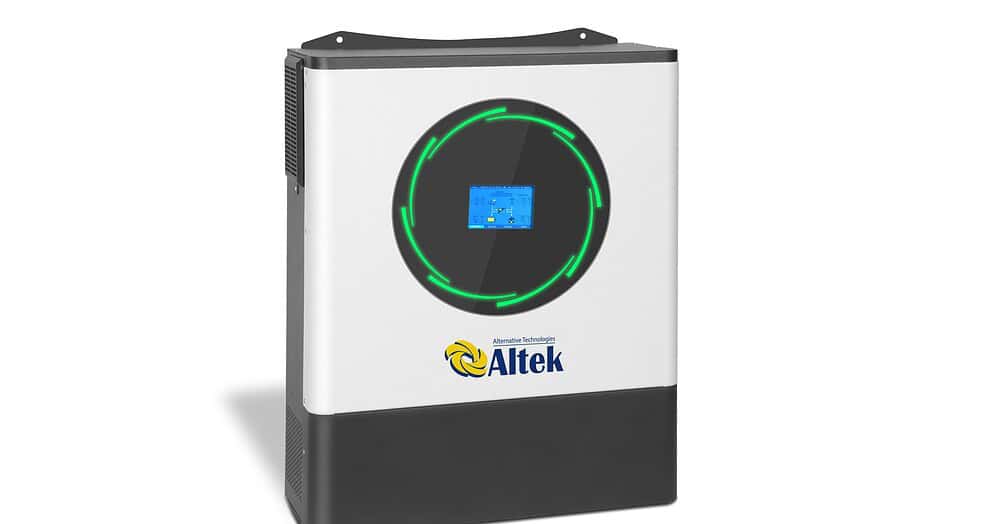
- Type of inverter. A hybrid inverter can simultaneously cover consumption and sell excess electricity, while a grid-tied inverter maximizes sales but shuts down during grid outages. The selected inverter type affects both the monetization model and payback calculations.
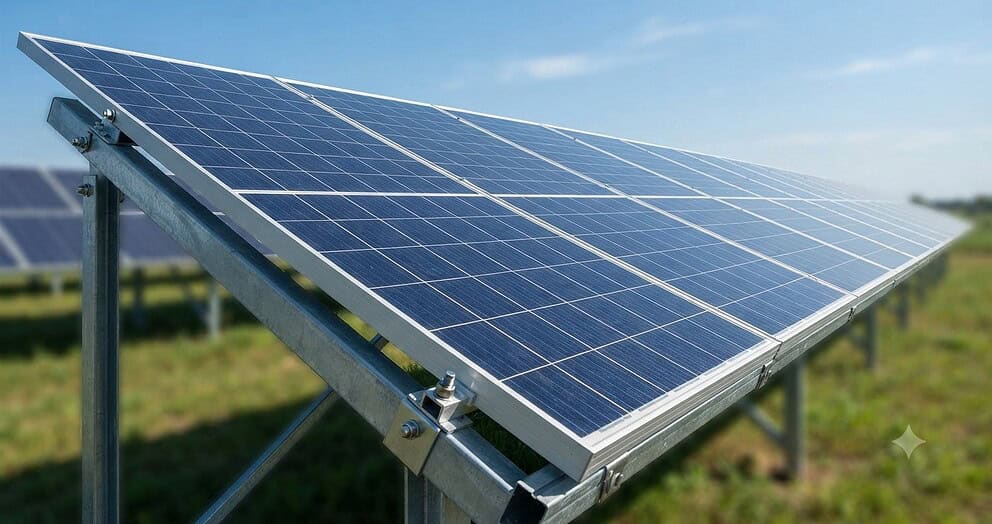
- Equipment quality. The normal degradation rate of a high-quality monocrystalline module is approximately 0.5% per year. Low-cost solar panels may lose 1–1.5% of output annually. Over 25 years, the difference in energy production can reach 15–25%. Altek supplies solar panels with a 25–30-year power output warranty.
In addition, during wartime conditions, some insurance companies offer coverage for solar power systems against physical damage.
What Affects the Payback Period of a Solar Power Plant?
The payback period is the primary concern for any investor. Typical benchmarks for Ukraine in 2026 are:
- Residential hybrid solar system, 5 kW: a complete system with battery storage and installation typically costs $5,000–6,500. Annual savings and revenue from surplus energy sales can amount to approximately $600–1,000. Payback period: 5–8 years.
- 10 kW grid-tied solar system for business: estimated cost ranges from $7,000–9,000. With a high level of self-consumption, annual savings can reach $1,500–2,500. Payback period: 3–6 years.
- 100 kW commercial solar power plant: base cost starts from approximately $35,000–40,000 and above. Annual economic benefits may range from $15,000–25,000 depending on electricity consumption, tariffs, grid connection conditions, and the chosen electricity sales model. Payback period: typically 3–5 years.
Additional factors affecting payback include loan interest rates (the “5-7-9%” financing program is available for SMEs), rising electricity tariffs, and operating expenses, which are minimal and generally limited to cleaning solar panels once or twice per year.
What Profit Can Be Earned from Selling Electricity?
Let’s look at a practical example. A 30 kW grid-tied solar power plant in the Dnipropetrovsk region (solar irradiation of approximately 1,400 kWh/m² per year):
- Annual energy production: 30 kW × 1,400 hours × 0.8 (system efficiency) = approximately 33,600 kWh.
- Electricity offset through self-consumption: at a tariff of UAH 7/kWh, annual savings amount to approximately UAH 235,200 (around €5,700).
- If 30% of electricity is exported to the grid under the feed-in tariff: 10,080 kWh × €0.132 ≈ €1,330.
- Total annual benefit: approximately €7,000.
The estimated cost of a turnkey solar power plant with a capacity of 30 kW is approximately €18,000–22,000. With annual returns of around €7,000, the payback period is about three years. After that, the system can continue operating for another 20–25 years with minimal maintenance costs.
The above calculation is approximate. Altek specialists can provide exact figures through a free customized feasibility study for your facility. Contact us via the website or by phone and provide your property address, roof area, and average monthly electricity consumption.


Your email address will not be published. All fields are required